Sopa de Fideo: A Toasted Noodle Soup Formula
- Toast the noodles, then control the liquid
- Recipe at a glance
- Ingredients
- Prepare produce and equipment
- Blend the tomato base
- Toast the fideo evenly
- Fry the tomato base carefully
- Add the remaining broth and simmer
- Serve before the noodles drink the meeting dry
- Make deliberate variations
- Troubleshoot the pot
- Cool, store, and reheat safely
Toast the noodles, then control the liquid
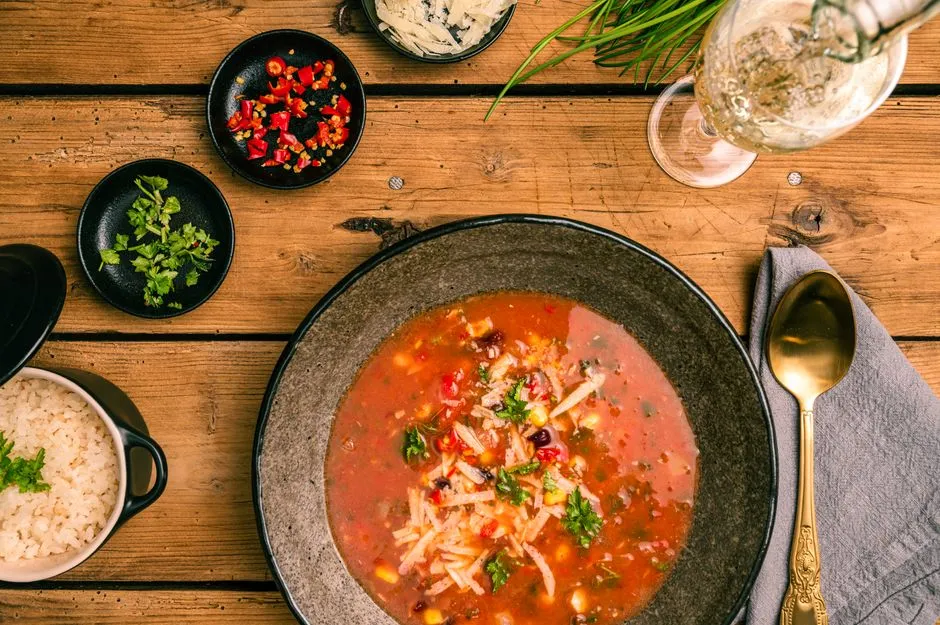
For six bowls of sopa de fideo, toast 200 grams dry fideo or thin broken noodles in 30 millilitres oil. Add a blended base of 400 grams tomatoes, 100 grams onion, 10 grams garlic, and 240 millilitres of the recipe's 1.2 litres broth. Simmer briefly, add the remaining 960 millilitres broth, and cook only until the noodles are tender. Rest 5 minutes, taste, and adjust salt.
The result is a light tomato noodle soup whose texture comes from measured liquid and timing, not from hoping one handful of pasta has the same emotional dimensions as another.
Recipe at a glance
- Yield: 6 bowls
- Pot: 4-litre heavy saucepan or Dutch oven
- Preparation: about 15 minutes
- Cooking and rest: 25 to 34 minutes
- Total: 40 to 49 minutes
The range adds 4–6 minutes to toast the noodles, 5–7 minutes for the tomato base, 4–6 minutes to return the pot to a simmer, 7–10 minutes to cook the noodles, and a 5-minute rest. Minimum: 4 + 5 + 4 + 7 + 5 = 25. Maximum: 6 + 7 + 6 + 10 + 5 = 34.
Noodle thickness, pot width, broth temperature, and burner output alter the clock. Taste the noodle; do not keep simmering because the upper estimate looks lonely.
Ingredients
- 200 grams dry fideo, vermicelli, or thin spaghetti
- 30 millilitres neutral cooking oil
- 400 grams canned tomatoes with their juice, or ripe fresh tomatoes
- 100 grams white onion, roughly chopped
- 10 grams garlic, roughly 2 medium cloves
- 1.2 litres low-sodium chicken or vegetable broth, divided
- 2 grams dried Mexican oregano, optional
- 5 grams fine salt to start, plus more after tasting
- 1 bay leaf, optional
- Lime wedges, chopped cilantro, diced avocado, or crumbled cheese for serving, optional
If using spaghetti, break it into pieces about 2.5 to 4 centimetres long, then weigh 200 grams. Breaking first contains the confetti; weighing second preserves the formula.
Broth sodium varies widely. Five grams salt is a cautious starting point for low-sodium broth, not a command to add that amount to a salty commercial product. Taste the broth before seasoning and adjust the recipe's starting salt accordingly.
Prepare produce and equipment
Wash fresh tomatoes under running water before cutting, even if they will be blended and cooked. The FDA produce guidance advises running water and does not recommend soap, detergent, or commercial produce wash.
Measure the entire 1.2 litres broth. Pour 240 millilitres into the blender and reserve 960 millilitres for the pot:
1,200 mL - 240 mL = 960 mL
Keeping the total visible prevents a common soup problem: using some liquid in the blender, forgetting it counts, then adding the full amount again.
Choose a long-handled spoon and keep a lid nearby as a shield, not as a permanent cover. Tomato puree can spit when it meets toasted noodles and hot oil.
Blend the tomato base
Blend the tomatoes, onion, garlic, 240 millilitres broth, oregano if using, and the starting salt until smooth. Pause and scrape the blender jar if needed.
For a more textured soup, blend only until no large onion pieces remain. For a smoother broth, blend longer and strain the mixture through a medium-mesh strainer. Straining changes texture, not the measured liquid total, unless a large amount of pulp is discarded; if that happens, note it for the next batch.
Use cool or room-temperature ingredients in a standard sealed blender. Follow the manufacturer's limits and venting instructions for warm ingredients.
Toast the fideo evenly
Heat the oil in the dry pot over medium heat. Add the noodles and stir continuously for 4 to 6 minutes. Move pieces from the edge toward the center and scrape the base so they color evenly.
Stop when most pieces are pale to medium golden and smell nutty. A few lighter pieces are better than a pot of dark brown ones. Toasted does not mean scorched; black fragments make the broth bitter and will not reconsider during simmering.
If the noodles brown in under 3 minutes, lower the heat. A thin pot may need medium-low. If they remain pale after 6 minutes, raise the heat slightly and continue by color rather than discarding the batch at an arbitrary deadline.
Fry the tomato base carefully
Reduce the heat to medium-low. Pour in the blended tomato mixture slowly while stirring. Stand back from the first burst of steam and spatter.
Cook for 5 to 7 minutes, stirring often, until the raw onion aroma softens, the color deepens slightly, and the mixture no longer looks foamy. Scrape the bottom. The noodles will begin absorbing liquid, so do not wander away to organize garnishes by personality.
If the puree catches, add 30 millilitres from the reserved broth and lower the heat. Count that 30 millilitres as part of the 960 millilitres still to be added, not as bonus liquid.
Add the remaining broth and simmer
Pour in the remaining 960 millilitres broth and add the bay leaf if using. Stir thoroughly to release noodles from the base. Increase the heat and bring the soup back to a steady simmer, which usually takes 4 to 6 minutes.
Lower the heat. Simmer uncovered for 7 to 10 minutes, stirring every 2 minutes, until the noodles are just tender. Use the package time as a clue, especially with spaghetti, but start tasting early because the noodles already spent time in hot tomato sauce.
Remove the bay leaf. Turn off the heat, cover, and rest for exactly 5 minutes. The noodles continue absorbing broth during this pause. Taste, then adjust salt in small increments.
If the soup is thicker than you like, add hot broth or water in measured 60-millilitre increments. Stir and reassess after each addition. Recording the final addition lets you begin with a better ratio next time.
Serve before the noodles drink the meeting dry
Divide the pot into six bowls. For equal servings, weigh the finished soup in a heat-safe container, subtract the container weight, and divide by six. If the net soup weighs 2,100 grams:
2,100 ÷ 6 = 350 grams per bowl
That is an arithmetic example, not a promised final weight; evaporation and added liquid vary.
Offer lime, cilantro, avocado, or cheese at the table. Add crunchy garnishes immediately before eating. Sopa de fideo can be a light first course, a comforting lunch, or part of a larger table with chicken tinga tacos and calabacitas con elote.
If you want a chile note, blend a small amount of properly prepared chile puree into the tomato base. The dried-chile guide explains toasting, soaking, bitterness, and storage. Do not drop a whole unidentified dried chile into the pot and call the outcome research.
Make deliberate variations
With vegetables: Add 150 to 250 grams diced vegetables. Cook firm carrot with the tomato base; add corn or zucchini during the final minutes. Large additions make the soup more substantial and may need extra hot liquid.
With water: Replace all 1.2 litres broth with water. Keep the division at 240 millilitres for blending and 960 millilitres for the pot. Taste more carefully for salt and aroma.
With thicker pasta: Keep the weight at 200 grams, check the package time, and expect a longer simmer or more liquid. Add liquid only in measured increments rather than changing both variables at once.
For a drier fideo: That is a different target. Reduce total liquid only after testing a separate batch and record the result; do not promise soup and quietly serve a side dish.
Troubleshoot the pot
Pale, oily noodles: They were not toasted long enough or the heat was too low. The soup is still edible, but it will lack the nuttier aroma.
Bitter broth: The noodles or tomato residue scorched. If black deposits remain on the pot, transferring the unburned top portion may help, but do not scrape the base into it.
Mushy noodles: They simmered too long, rested too long before serving, or began very thin. Shorten the cook and serve sooner next time.
Soup becomes thick in storage: Expected. Noodles continue absorbing broth. Add measured water or broth while reheating until the texture returns.
Flavor seems flat: Check salt, then add lime at the table. Acidity brightens the bowl but does not replace adequate seasoning.
Cool, store, and reheat safely
Move leftovers into shallow containers within 2 hours of cooking, or within 1 hour when the temperature is above 90°F (32.2°C). Keep the refrigerator at 40°F (4.4°C) or below and use the soup within 3 to 4 days, following USDA leftovers guidance.
Reheat leftovers to 165°F (73.9°C). Stir before checking more than one area, since thick soup heats unevenly. Add water or broth before or during reheating, not after the noodles have welded themselves to the pot in protest.
Freeze in practical portions if desired, understanding that thawed noodles will be softer. Label the container with the name and date; tomato soup is not improved by freezer archaeology.